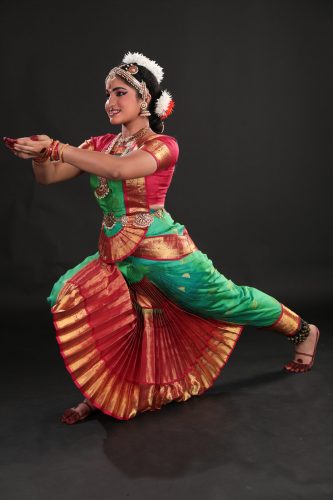
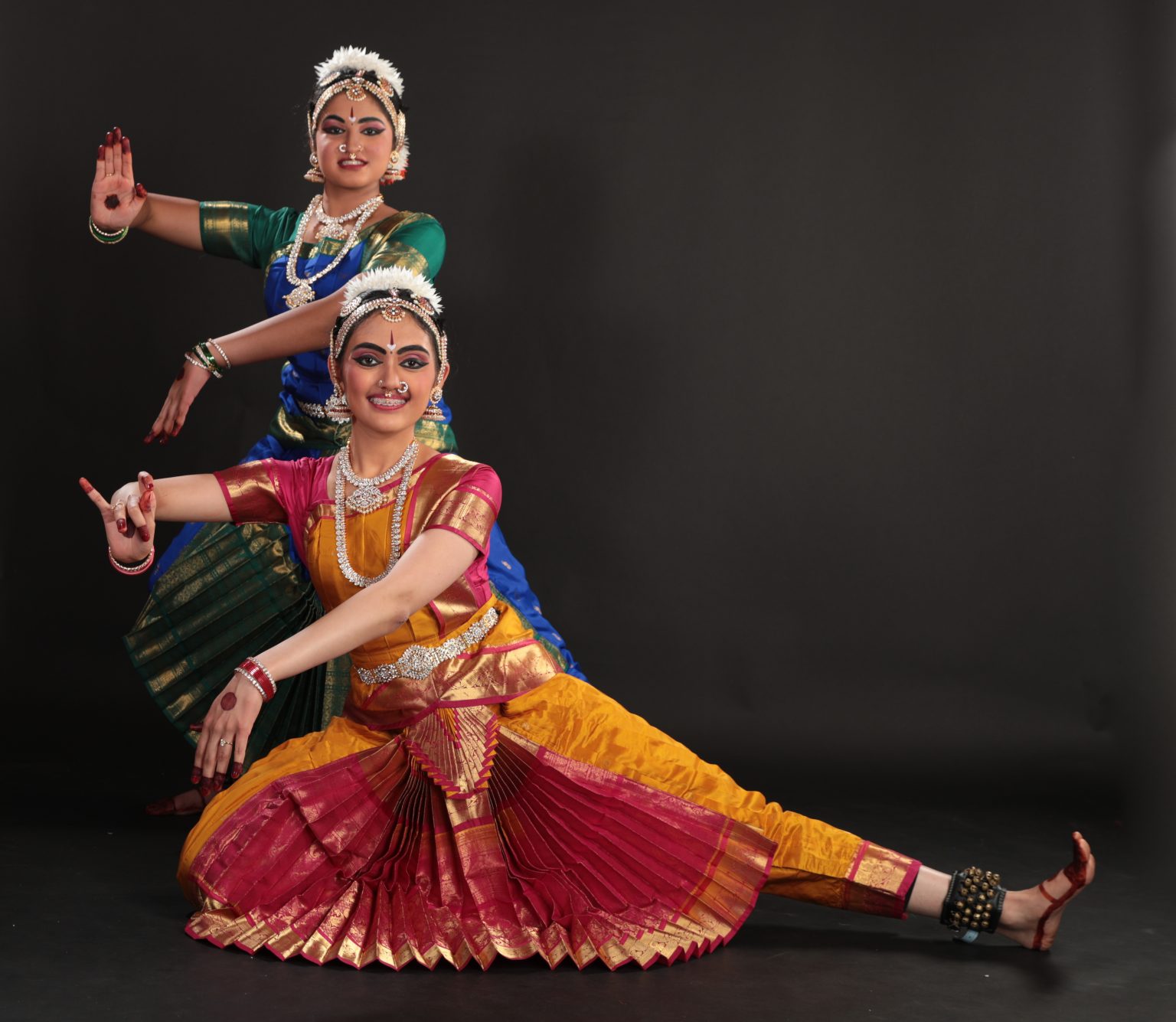
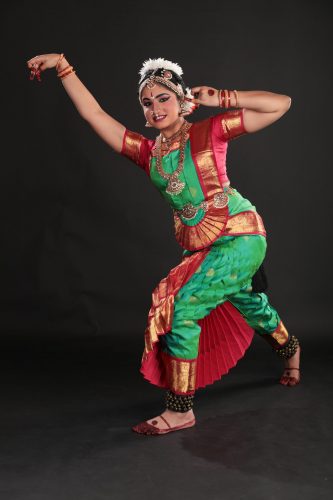
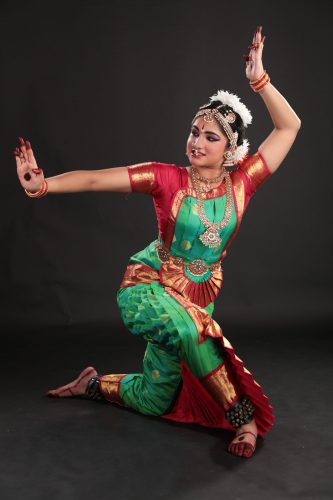
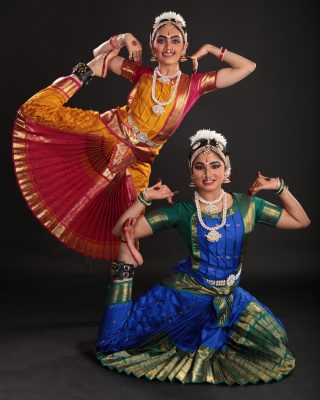
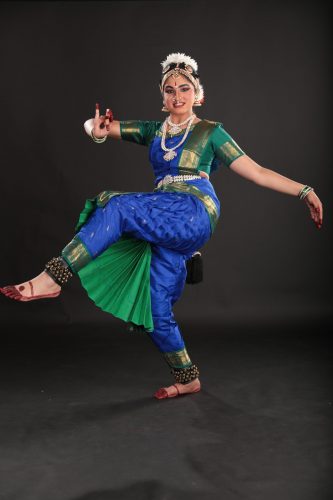
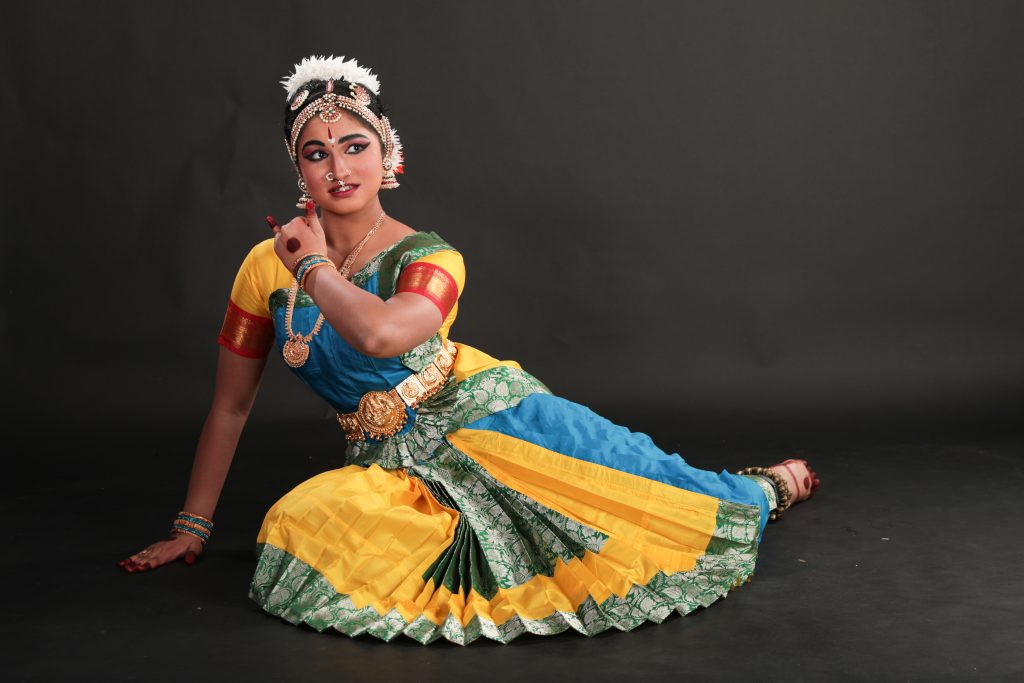
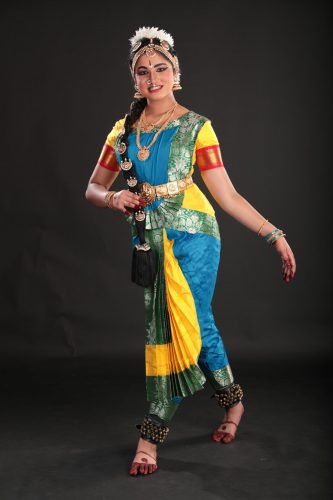
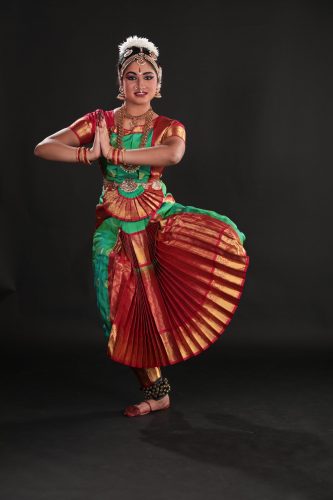
Mallari is an invocation piece usually set to the raga Gambhira Nattai. It is purely nritta, choreographed to a structured and rhythmic music and danced to three different speeds of bharatanatyam. Mallari indicates the commencement of worship, here in the form of dance and invokes the blessings of Shiva the lord of dance.
Ragam : Gambira Nattai
Talam : Kanda
Composer : Guru V.S. Muthuswami Pillai
Pranavakaram
Ragam : Arabhi
Talam : Adi
Composer : Oothukadu Venkata Subbaiyer
This piece is about the glory of Lord Ganesha, the god who removes obstacles, and his cosmic dance that pleases celestial beings. The song starts with describing the sparkling jewels adorned by Lord Ganesha and goes on to praise his ability to grant boons to his devotees. Lord Ganesha, the poet says, helps Gopikas attain union with Lord Krishna, a symbolic reference to how His blessings help human beings attain spiritual enlightenment. The dancers will portray the form of Ganesha as imagined by the poet.
Jatiswaram
A Jathiswaram is pure nrrita, with the focus being on the footwork rather than on facial expressions. It is performed to swaras, or notes, and not to sahityams, or lyrics. It is a completely rhythmic dance item and hence tests the dancers’ footwork and their ability to dance to the swaras and the jatis. Jathiswarams follow a specific structure, beginning with a thirmanam that is repeated 3-4 times, called avartanams. Between the thirmanams, the dancer uses basic steps strung together to form a korvai. Each korvai is followed by mei adavu, which involves elaborate body movements.
Ragam : Rasikapriya
Talam : Adi
Composer : Sri Lalgudi G. Jayaraman
Varnam
Ragam : Panthuvarali
Talam : Roopakam
Composer : Thirunavukkarasar
Varnam is the longest and most challenging piece in an arangetram, challenging both the dancers stamina and ability for complex footwork as well as their ability to convey stories through their dance. In this piece, the dancer describes Lord Shiva and his beautiful features to create the picture of the strong and passionate god, while also telling tales of his feats and accomplishments along the way.
Rusali Radha
Ragam : Misra Yaman
Talam : Adi
Composer : Rangeshvar
Rusali Radha examines the relationship between the young couple or Radha and Krishna. As Radha is patiently waiting for Krishna in the beautiful forest she finds that he is playing with the other Gopikas. Radha quickly becomes upset and, not understanding her feelings, Krishna becomes upset with her as well. The narrator observes how the beautiful Gokul begins to deteriorate as a result of the young lovers’ quarrel.
Tillana
Ragam : Mand
Talam : Adi
Composer : Sri Lalgudi G. Jayaraman
A Tillana is a mostly rhythmic and energetic composition that is usually performed near to the end of a dance program. It has a few lines of sahithyam in the charana, the sahithyam is the part of the song that allows for the composer to offer their devotion to their presiding god. This thillana is about Devi, the eternal goddess who is an all encompassing mother goddess that goes by many names and has many roles. The thillana praises goddess devi through her many names and roles such as omkari, gauri and kamakshi, asserting that there isn’t
another god such as her in the universe and asking her to protect them.
Mangalam
Ragam : Madhyamavati
Talam : Adi
The Mangalam is the concluding piece in an arangetram and celebrates the end of a dance repertoire. In addition to the traditional mangalam Meera and Varsha will be performing a mangalam to the songs ‘Shilaye kai kondu” and “Adimalarine thanne” sung by their dads Anil Nair and Prasad Akavoor. The dancer concludes the program bowing to the Gods, the Guru, and the musicians, who prepared them for this moment.